Pets are part of our family, and a key to keeping pets healthy is scheduling routine wellness visits with a veterinarian. Just as you take your kids, and hopefully yourself, for annual checkups, exams, wellness bloodwork, and vaccinations, the same goes for your pets. It is even more important for them because pets age faster than we do. Take a look at these AVMA stats to see how quickly they age in “human years,” as an approximate guideline to show why visits at least once per year are ideal.
| Human years | Medium-sized dog (21-50 lbs) | Average-sized cat |
1 year ≈ | 15 dog years | 15 cat years |
2 years ≈ | 24 dog years | 24 cat years |
5 years ≈ | 36 dog years | 36 cat years |
10 years ≈ | 60 dog years | 56 cat years |
15 years ≈ | 83 dog years | 76 cat years |
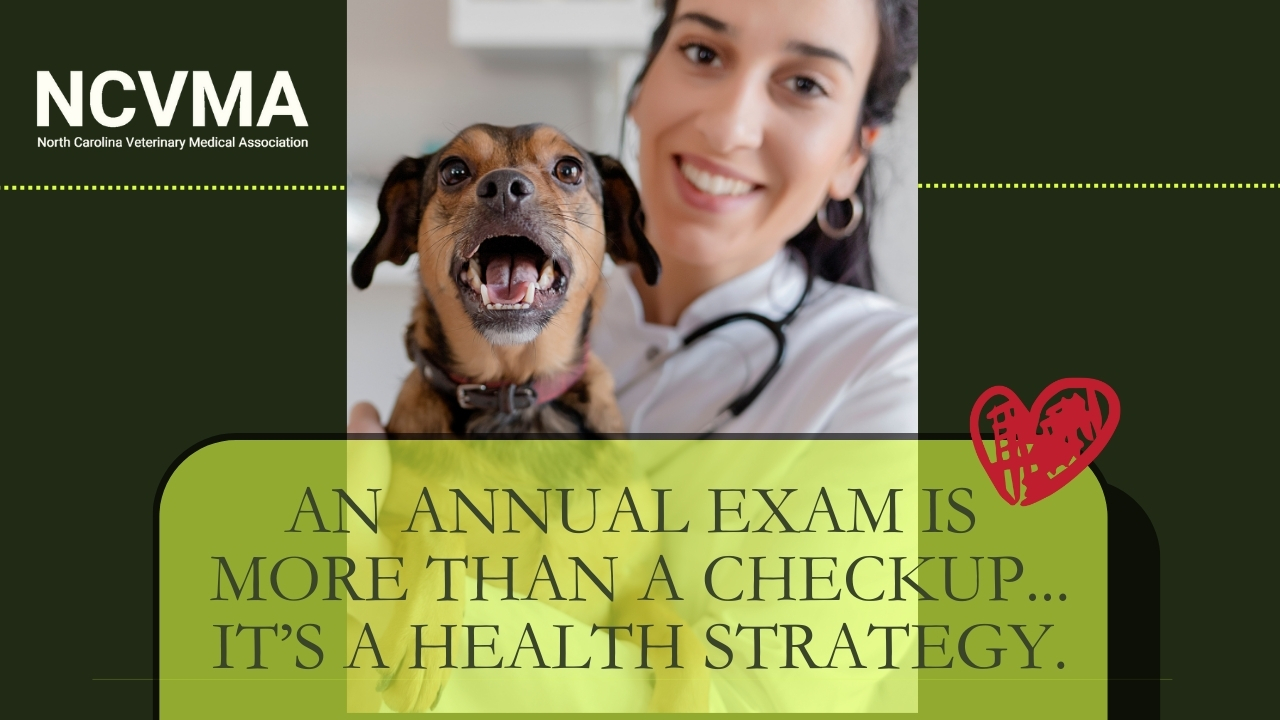
Skipping your pet’s annual exam can mean missing valuable advice on how to keep them healthy, comfortable, and pain-free, while also establishing a baseline for their health. So, what happens during this important visit? During an annual exam, your vet performs a head-to-tail checkup, evaluating everything from vision and heart health to joints, skin, and coat. Based on what is found, you will receive care tips tailored specifically to your pet, and your vet will establish a baseline for future visits. This makes it easier to track changes over time, such as the size of a mass, the progression of dental disease, or vision issues like cataracts that could affect their sight later. Knowing these details helps you care for your pet strategically and supports graceful aging.
Annual exams also include updating vaccines, which are essential for protecting your pet against diseases they may pick up from other dogs they encounter at the dog park, during boarding or if they accidentally get lost and end up in a shelter situation. Bloodwork is another important part of the visit. Basic tests, such as fecal testing and heartworm/tick screening, detect common, serious conditions spread by parasites, while optional full bloodwork (CBC, chemistry panels, etc.) helps track subtle changes over time. Many diseases remain silent until they become serious, so catching them early or monitoring trends can be vital for your pet’s long-term health.
Now, let’s dive into a few common questions pet parents have about preventative care and vet visits:
1. Why does my vet recommend an exam before giving medication?
Exams are recommended whenever a pet needs treatment because we cannot responsibly treat what we have not properly evaluated. Even though signs (like itching, vomiting, or limping) can seem straightforward or similar to a prior vet visit, they can have very different underlying causes. An example is an itchy dog. Let’s say your dog tends to get itchy every spring. Last year, you brought your dog in, and fleas were found on exam. Flea prevention medications were given and symptoms resolved. However, this year you bring your dog in for itching, but allergies (atopic dermatitis) are suspected. While the symptom (itchiness) can seem similar, the causes and treatments can vary. We won’t know how to treat without an exam and could miss things by just treating from what we hear over the phone or see in an email. This exam allows us to assess your pet’s overall health and make sure we are choosing the right medication at the correct dose, and that it is safe based on their age, history, and any existing conditions. Additionally, an exam may reveal other findings that give us the opportunity to provide guidance or education.
This is part of what’s called a Veterinarian–Client–Patient Relationship (VCPR), which means we have an established relationship with you and your pet, have examined them recently, and are taking responsibility for their medical care. A VCPR is not just a legal requirement, it ensures we truly know your pet and can make thoughtful, informed decisions that support their health and well-being.
2. Why does my vet ask so many questions?
Veterinarians have something in common with pediatricians. Our patients cannot tell us what they are feeling, so we rely on the owner’s help to fill in the gaps. Asking thoughtful questions about your pet’s history and symptoms helps us to be thorough, guides our exam, and ensures we are not missing anything important. Often, your answers give us valuable clues about possible underlying causes.
A great example is a dog that is vomiting. One of the best ways we determine what is truly happening is by asking detailed questions because some pets are actually regurgitating instead. Vomiting is an active process, while regurgitation is more passive. Many owners understandably don’t know the difference, but through careful questions, we can determine what your pet is experiencing at home. This distinction matters because the causes, diagnostic tests and treatments we recommend can be very different.
You can help your veterinary team by jotting down notes before your visit. Keeping track of when symptoms started, how often they occur, and how long they last can be incredibly helpful. For example, if your dog is having seizures, noting the date, time, and duration is extremely important. Photos and videos are also very helpful, as anything that shows us what your pet is experiencing at home gives us better information to provide the best possible care.
3. Why does my vet want to see my pet even if they ‘seem fine’?
Annual exams are an important part of tracking your pet’s health over time. Seeing your pet regularly helps maintain an active Veterinarian–Client–Patient Relationship (VCPR) and ensures we truly know what is normal for them. This exam also allows us to catch subtle changes early and sometimes before you notice it at home.
Even if your pet vomited once or twice and seems to be acting normally, an exam is still important before we give medical advice. Pets are very good at hiding illness, and mild or intermittent symptoms can occasionally signal something more serious. An exam, and sometimes diagnostic testing like bloodwork or x-rays, helps us make sure we’re not missing anything. For example, many veterinarians have examined a dog with mild vomiting and ultimately found a foreign object in the stomach. In some cases, that object was swallowed weeks or even months earlier and simply hadn’t moved. Our goal is always to provide the best possible care and prevent small issues from becoming bigger problems later.

Your veterinarian is here to provide the best care for your pets and to keep you informed every step of the way. Caring for animals is a true team effort, and since our patients cannot speak for themselves, we rely on you to help us support them. If you need assistance finding a veterinarian near you, visit www.ncvma.org/find-a-vet