by Karson Dean, Veterinary Assistant – DocTerra Mobile Veterinary Services, PLLC
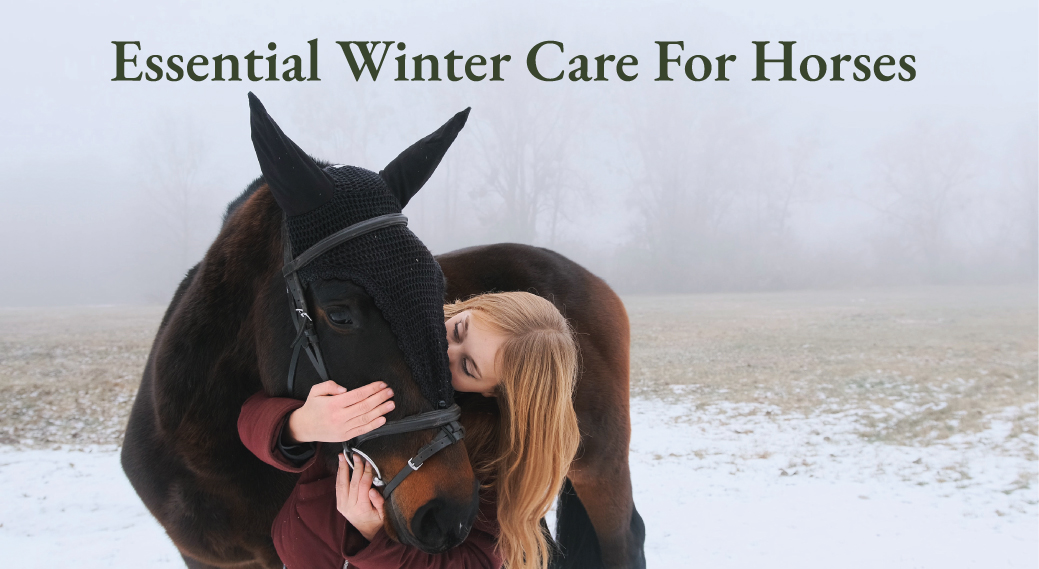
Aesthetically, winter can seem like a beautiful time of year to spend with horses. But as magical as snow-covered pastures and fuzzy horses dressed in their winter coats may seem, colder weather creates unique challenges for horses that require specialized care. Luckily, many of these challenges can be prevented with simple adjustments to horses’ routine care. Here are some common winter health concerns horses may face, and what you can do to prevent them.
Challenge: Dehydration and Impaction Colic
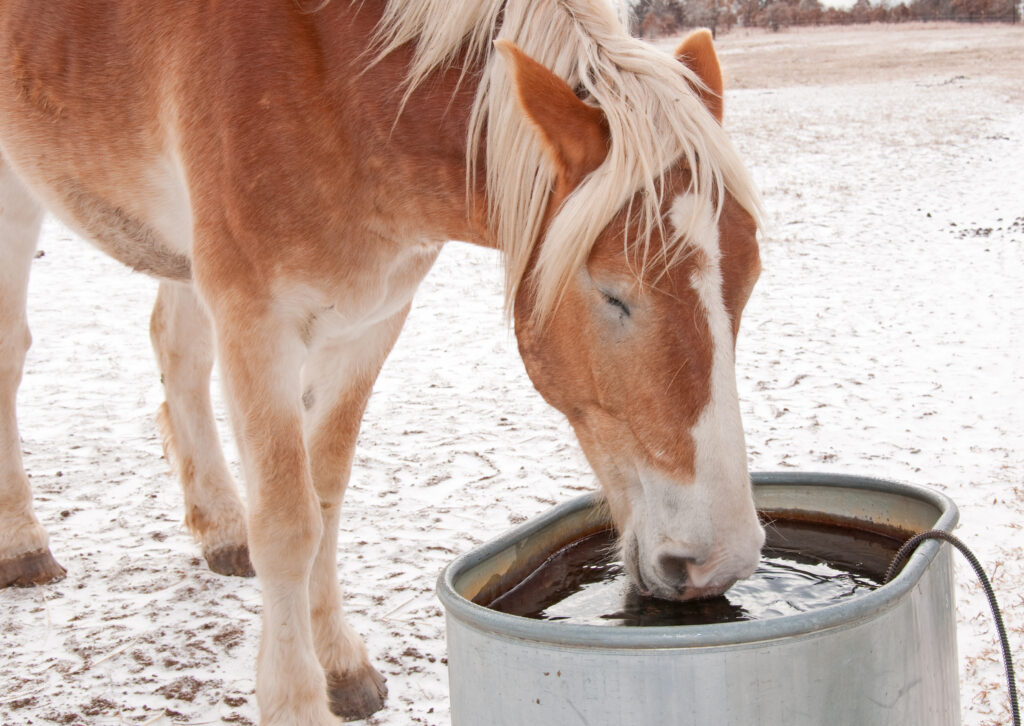 As cooler temperatures approach and the vegetation begins to die off, horses naturally consume less water. Their diets are often switched to more dry hay and pelleted feeds in the winter, which contain less water than the fresh grass they graze on in the warmer months. Horses may also be reluctant to drink water if their water source is extremely cold or frozen. Reduced water intake can not only lead to dehydration but also impaction colic, which happens when feed material becomes lodged in the gastrointestinal tract.
Prevention: The best way to prevent dehydration and impaction colic is by providing constant access to a fresh, clean, unfrozen water source. Heated water buckets or tank heaters are great tools to keep ice from forming in your horses’ troughs. If a heated water bucket or tank heater is not feasible, make sure you are checking your horses’ water source at least twice a day and cracking any ice that may have formed. Large pieces of ice should be removed from the water source altogether.
 Challenge: Hypothermia and Malnutrition
 Challenge: Hypothermia and Malnutrition
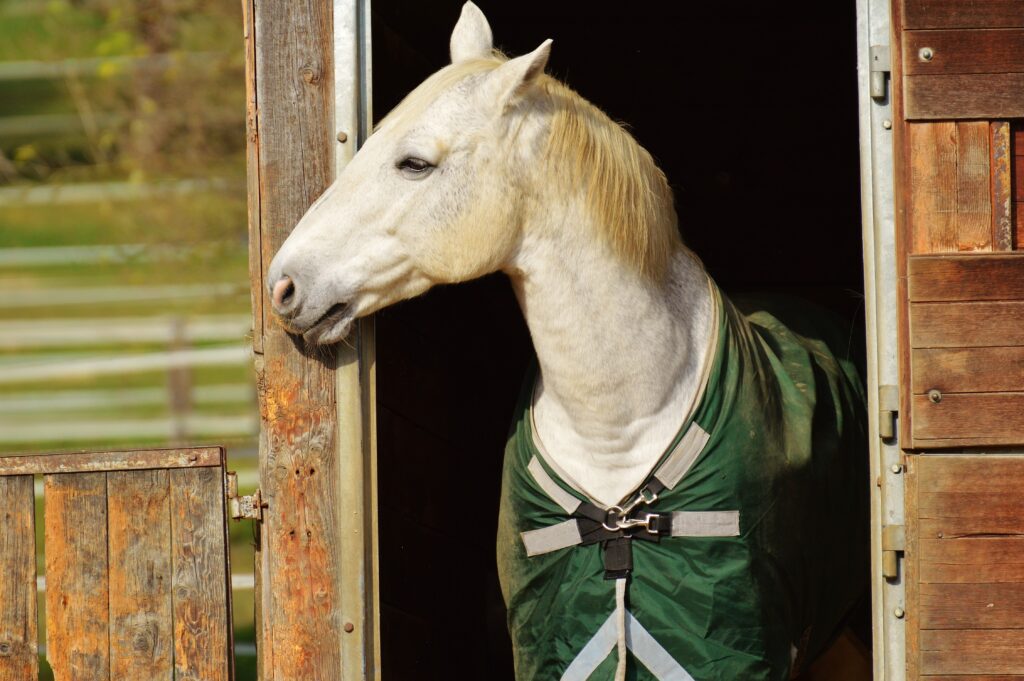
Horses are hindgut fermenters, which means that they eat to help to stay warm. In the winter, the energy and caloric intake horses need to maintain their body temperature increases. Without access to enough good-quality hay, feed, and shelter, you may notice your horse beginning to drop weight. The more weight a horse drops, the more susceptible they become to malnutrition and hypothermia.
Prevention: Ensuring that your horse is provided with adequate forage will help combat malnutrition and hypothermia. As a rule of thumb, horses should have free access to good quality grass hay and should eat a minimum of 2% of their body weight each day in forage. Some horses may require additional supplements or grain in addition to forage to maintain an ideal body condition. Consult with your veterinarian to see what feeding regimen works best for your horse. It is also important to make sure your horse is provided with proper shelter to escape the elements and is blanketed if needed. Horses will grow a winter coat, so not every horse needs to be blanketed. However, consider blanketing your horse if they are clipped, malnourished, very young, a senior, or not acclimated to the cold.
Challenge: Respiratory Issues
In the winter, horses will often spend more time stalled in the barn. Spending more time inside increases their risk of exposure to dust and molds that they may not encounter as frequently when turned out. Poor stall and barn ventilation can lead to respiratory irritation, such as coughing, nasal discharge, and/or breathing difficulties.
Prevention: Maintaining proper barn ventilation is the best way to combat respiratory issues. Ensure that your horse’s stall is mucked daily, use low-dust bedding, and soak their hay to reduce airborne particles. Installing ceiling fans can help combat humidity levels and improve air exchange. But most importantly, allow your horse regular turnout time and access to fresh air.
Challenge: Joint Stiffness and Inflammation
As mentioned previously, during colder temperatures, owners will often stall their horses more. Colder weather, increased confinement, and limited exercise can all lead to joint stiffness and lower leg swelling. This is more common in senior horses or horses with arthritis. Increased stiffness and swelling can lead to discomfort and lameness issues.
Prevention: Regular movement is vital for a horse’s physical and mental health. Implementing regular turnout time and exercise into your horse’s winter routine can help prevent unnecessary joint stiffness and lower leg swelling. However, before exercising your horse, ensure that the ground has proper footing to decrease the chances of an accident. If your horse is experiencing chronic arthritis, make sure to consult your veterinarian on an appropriate exercise plan.
Challenge: Accidents and Injuries
Let’s be honest, every horse owner knows that horses are arguably the most accident-prone creatures to walk this earth. Unfortunately, on top of all the other challenging health concerns winter weather brings, it also brings more obstacles for our horses to injure themselves. Ice, slippery walkways, frozen ground, and deep mud are just a few environmental factors that increase your horse’s risk of slipping, falling, or sustaining substantial injuries.
Prevention:The best way to help prevent your horse from potentially injuring themselves is to regularly inspect the pastures, paddocks, stalls, barn aisles, and anywhere else they frequent. Inspect high-traffic areas for ice and the other hazards. Ideally, if a horse’s paddock is icy, it’s best to house them elsewhere until the ice melts. However, few horse owners have that option, so if moving your horse is out of the question, pouring sand or salt to help create traction on these icy areas is another solution. But, make sure to not feed your horse near where the sand is spread, as ingestion of sand can lead to gastrointestinal issues, such as colic.
Challenge: Rain Rot and Skin Infections
Rain Rot is a common bacterial skin infection that causes crusting, scabs, hair loss, and skin irritation. Horses can develop this infection year-round; however, winter months pose a greater threat. This infection is caused by excessive moisture, specifically when a horse’s coat stays wet for an extended period of time. As inclement weather arises, horses’ coats will become saturated with snow, ice, or rain, and because of the colder temperatures, they have no way of properly drying off, putting them at greater risk for rain rot.
Prevention: Providing your horse with adequate shelter that is clean and dry will help combat the development of rain rot. If you blanket your horse, make sure the blanket is clean and dry. But it is important to note that you should avoid blanketing a wet horse, as this will make it harder for their coats to dry out and create the perfect warm and moist environment for skin infections to grow.
Challenge: Hoof Care
Winter conditions can affect a horse’s hoof health in more ways than one. Cold, wet, muddy environments increase horses’ susceptibility to developing thrush. Thrush is a common bacterial infection that affects the frog, and wet conditions allow this bacterial infection to thrive. During snowy months, snow and ice can pack into horses’ hooves, causing discomfort and lameness, increasing their risk of slipping.
Prevention: In the winter, you should make it a habit to inspect and pick your horses’ hooves daily. Removing any dirt, mud, rocks, and snow will allow you to hopefully catch any infections early and also prevent injuries or lameness. Although horses’ hooves tend to grow slower in the winter, it is still important to keep regular farrier appointments and provide your horses with clean, dry areas to stand.
Keep Your Horses Happy and Healthy All Winter Long
Although winter months can appear challenging for horses, providing adequate fresh water, forage, dry shelter, exercise, and intentional grooming can make a significant difference in your horse’s physical and mental health. Most importantly, make sure you observe your horse daily. Make note of any changes in their appetite, water consumption, manure production, behavior, or movement. Recognizing potential problems early and contacting your veterinarian sooner, rather than later, can keep minor concerns from becoming serious health issues. With proper preparation and care, you can help your horse stay healthy and comfortable all winter long!
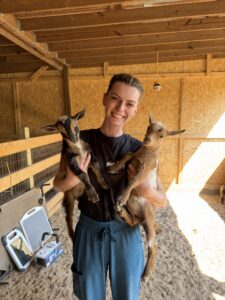 About the author:
Karson Dean, is a Veterinary Assistant working alongside Dr. Terra Smith at DocTerra Mobile Veterinary Services, PLLC in Vale, NC.