Another NCVMA Summer Conference is officially in the books! Once again, it demonstrated why this annual event remains a highlight for veterinary professionals across North Carolina.
Over the course of the weekend in Wilmington, attendees filled classrooms for a diverse lineup of continuing education sessions covering topics such as orthopedic disease management, neurology, ophthalmology, client communication, and even the role of humor in veterinary practice. The sessions featured plenty of engaging, case-based learning that encouraged discussion and audience participation. One standout moment? An unforgettable cartoon animal battle that had attendees weighing in with enthusiasm. (You truly had to be there to appreciate it!) For the first time, the conference also offered a concurrent wet lab, giving participants the opportunity to become RECOVER CPR certified while attending the event.
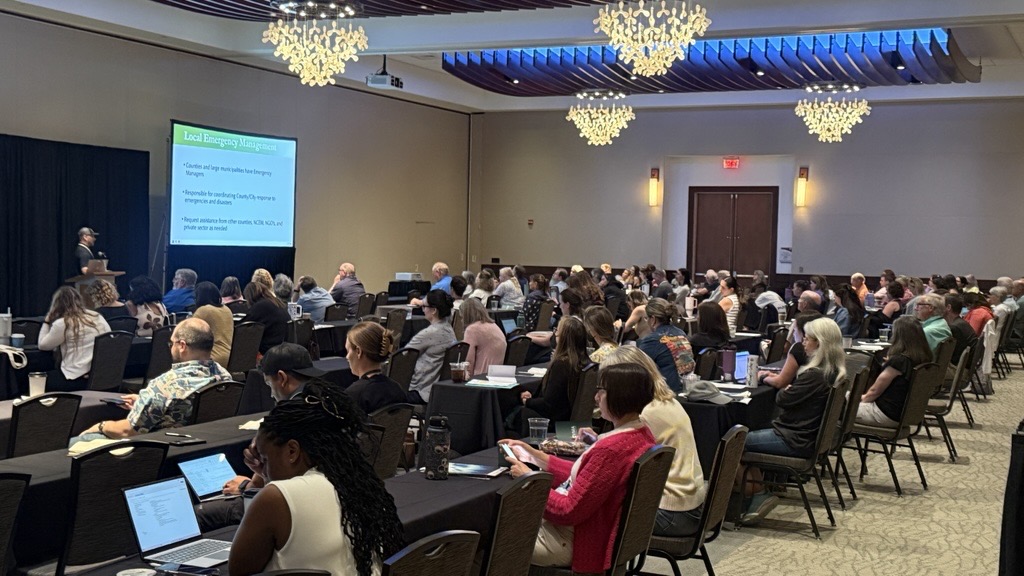
While the educational programming was a major draw, the conference also provided something equally valuable: an opportunity to reconnect with colleagues who understand both the rewards and challenges of veterinary medicine. Combined with some well-deserved rest and relaxation in a beautiful coastal setting, the event struck a meaningful balance between professional development and a chance to recharge.
Thoughtful additions throughout the weekend helped create a memorable experience for attendees. From an afternoon ice cream social that offered a refreshing break between sessions to a sunset cruise featuring live music and supporting Friends of NCVMA, there were opportunities for learning, networking, and fun at every turn. A free afternoon gave attendees the chance to explore historic downtown Wilmington, spend time at the beach, or simply unwind with a good book.
The conference also celebrated several important milestones, including the installation of NCVMA’s new officers and the recognition of three outstanding award recipients during the Welcome Reception.
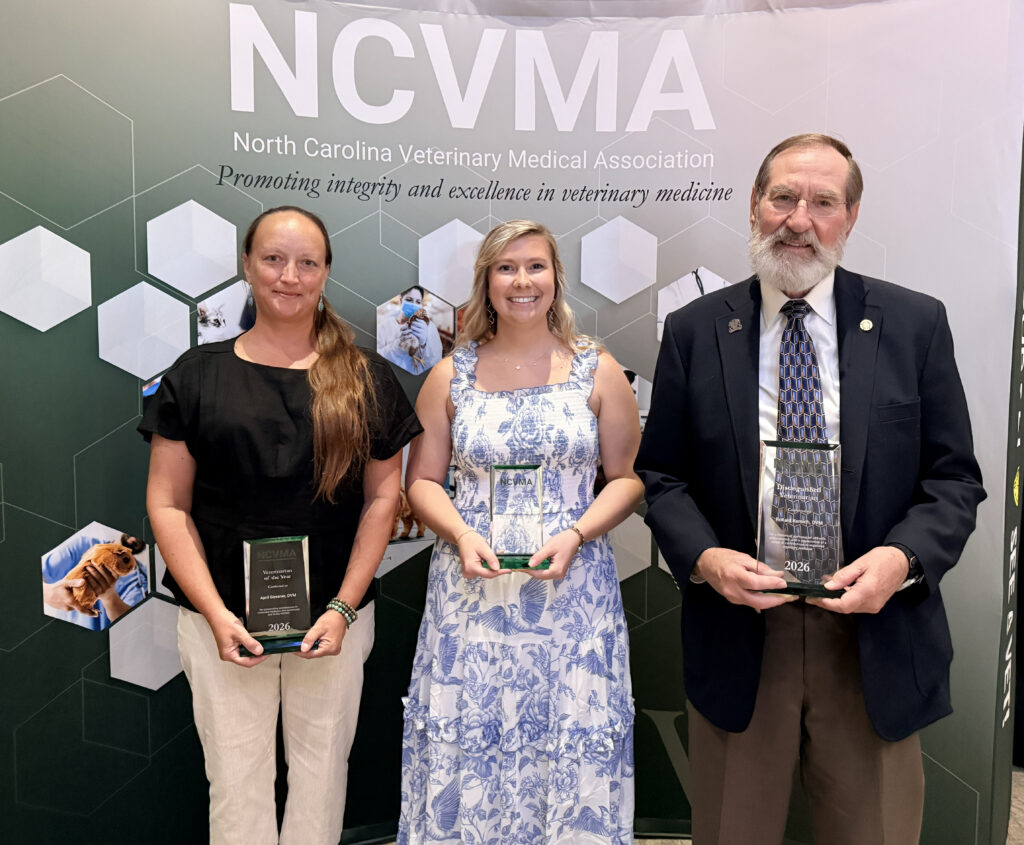
Veterinarian of the Year: Dr. April Gessner
A champion for access to care! From international service projects to founding DEGA Mobile Veterinary Care, Dr. April Gessner is creating opportunities for animals and families to receive the veterinary care they need, wherever they are.
Distinguished Veterinarian: Dr. Ronald Komich
For more than 50 years, Dr. Ronald Komich has helped shape veterinary medicine in North Carolina. A respected clinician, leader, mentor, and advocate, his influence can be seen in the profession’s standards, regulations, and future direction. From serving as president of NCVMA to helping modernize operations on the North Carolina Veterinary Medical Board, Dr. Komich has dedicated his career to advancing veterinary medicine and supporting his colleagues.
Young Veterinarian of the Year: Dr. Kaitlyn Boykin
Just three years after graduation, Dr. Kaitlyn Boykin has earned recognition as a skilled clinician, trusted communicator, collaborative leader, and Medical Director. Her dedication to growth, patient care, and advancing the profession embodies the very best of the next generation of veterinary medicine.
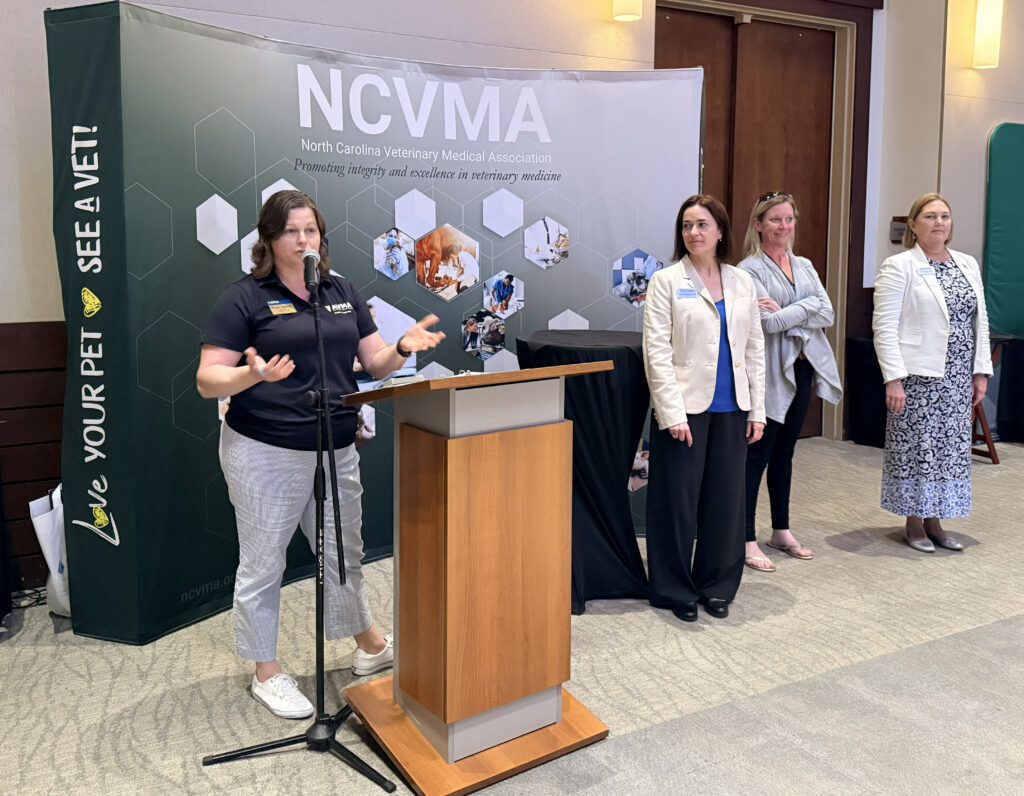
Dr. Jen Quammen, president-elect of AVMA, installed our new officers.
Congrats to our new officers!
- President: Dr. Paige Harrington, of Greenville
- President-Elect: Dr. Brian Stuber of Goldsboro
- Vice President: Dr. Eliza Ruffner of Wilmington
- Secretary: Dr. Rachel Sassone of Smithfield
- Immediate Past President: Dr. Karyn Smith of Wilmington
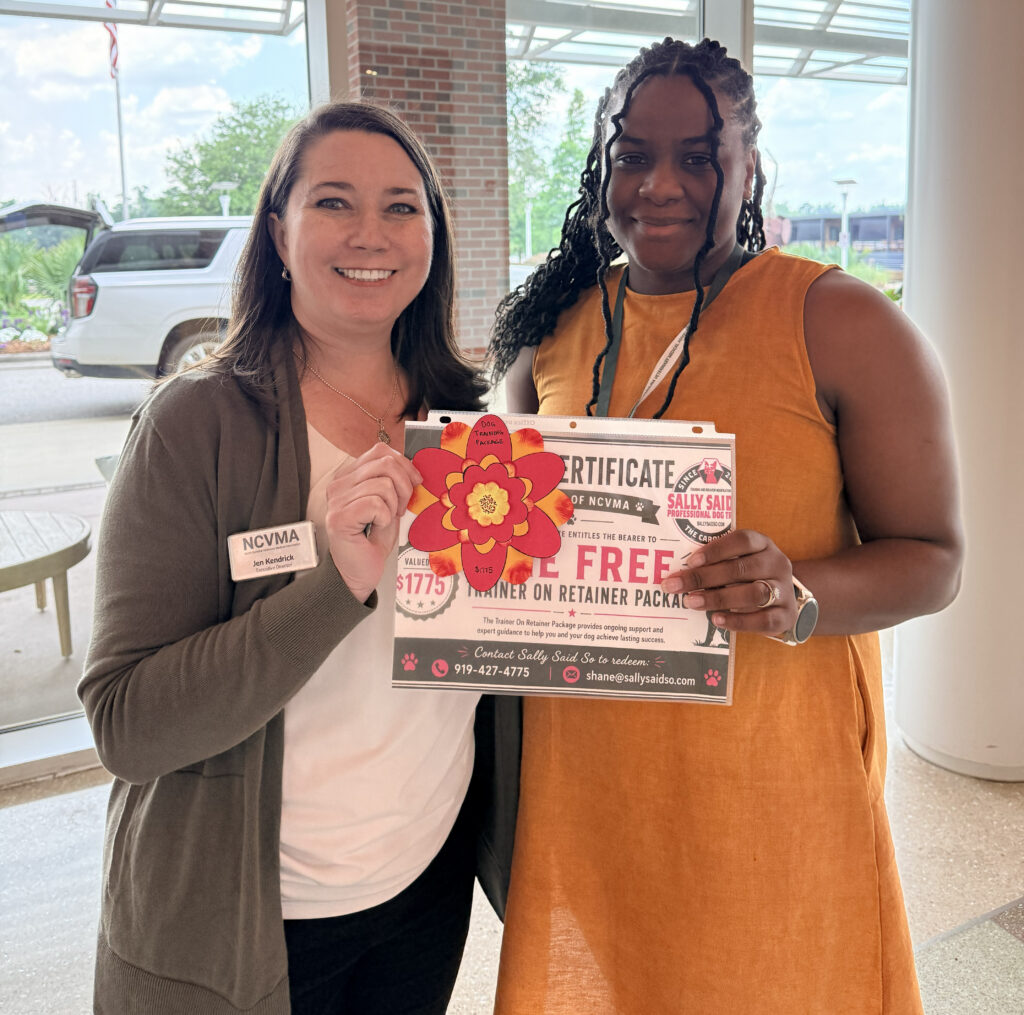


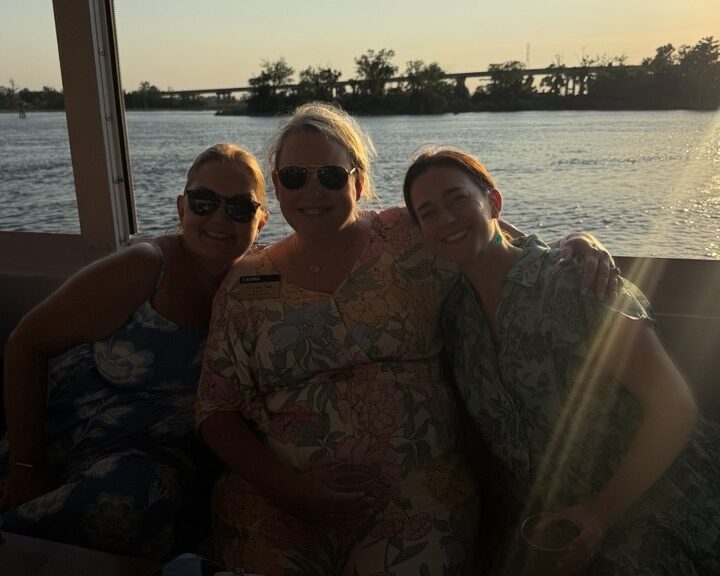
As we look back on the weekend, here are some takeaways, professional insights, and reminders we are carrying forward into our veterinary practice.
Some Takeaways We’re Bringing Back to Practice
 Cranial Cruciate Ligament (CCL) Disease: Setting Expectations Matters
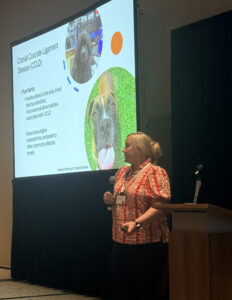 Cranial Cruciate Ligament (CCL) Disease: Setting Expectations Matters
- Client education remains one of the most important components of successful CCL management.
- Joint instability is the primary driver of pain and progression in CCL disease. Surgical correction addresses the underlying instability, while medical management focuses on symptom control.
- Current evidence continues to support surgical management over medical management for most patients, with osteotomy procedures (such as TPLO) demonstrating superior long-term outcomes compared to extracapsular repairs.
- Medical management can still play an important role for select patients, particularly:
- Dogs under 15 kg
- Partial CCL tears
- Sedentary patients
- Cases where surgery is declined
- Even modest weight loss can have a meaningful impact. A reduction of just 2% body weight, combined with physical therapy, can significantly improve quality of life.
- When discussing weight management with owners, a helpful comparison is that a dog carrying an extra 10 pounds is effectively moving with the equivalent of a 30–40 pound backpack.
- Rehabilitation should be viewed as a serious commitment. Long-term physical therapy often approaches the cost of surgical intervention and should not automatically be considered the “less expensive” option.
Osteoarthritis Management: Looking Beyond Pain Control
- Pain medications can be an important starting point that allows patients to comfortably participate in rehabilitation, exercise, and weight loss programs.
- Weight management remains one of the most impactful interventions for osteoarthritis, with nutrition accounting for the majority of successful weight-loss efforts.
- While newer therapies such as Librela continue to generate interest, thoughtful patient selection remains important. Ongoing research is evaluating both benefits and long-term considerations.
Diagnostic Fundamentals Still Matter
- Thorough histories, complete orthopedic and neurologic examinations, and repeat examinations when necessary remain critical to accurate diagnosis.
- Orthopedic radiographs should include a minimum of two orthogonal views.
- When evaluating orthopedic disease, obtaining comparison images of the contralateral limb can provide valuable baseline information and improve diagnostic confidence.
Cytology: A Powerful Tool for Antimicrobial Stewardship
- Cytology is one of the most underutilized tools available in general practice.
- It helps distinguish infectious, inflammatory, and neoplastic processes, allowing for more targeted treatment decisions.
- Cytology can guide empirical antibiotic selection while culture results are pending.
- Superficial infections can often be managed successfully with topical therapy alone, while deeper infections warrant culture and susceptibility testing.
- Effective source control remains essential because antibiotics alone should never replace identifying and addressing the underlying problem.
CPR Readiness: Every Team Member Plays a Role
- Every member of the veterinary team should feel comfortable performing CPR.
- Emergencies are unpredictable, making RECOVER-guided training and regular practice an important investment for patient care.
Elevating Ophthalmology Skills in General Practice
- Mechanical debridement techniques remain valuable tools for managing refractory corneal ulcers when appropriately selected and performed.
- Continuing education in ophthalmology allows general practitioners to expand the level of care they can confidently provide in-house. Confidence with common ophthalmic procedures can improve patient outcomes and reduce unnecessary delays in care.
Communication: Building Stronger Client Partnerships
- Agenda setting early in appointments helps establish shared goals and prevents last-minute concerns from derailing visits.
- Partnership statements such as “We’re on the same team” can improve client buy-in and treatment compliance.
- The most effective communication remains simple, honest, and kind.
Humor Has a Place in Veterinary Medicine
- When trust, empathy, and rapport have already been established, appropriate humor can strengthen relationships and ease stress for clients.
- Humor should always be used thoughtfully and with attention to a client’s emotional state and communication style.
- Far from being “extra,” humor can be a valuable evidence-based communication tool that supports both clients and veterinary teams.
FIP
- FIP is a systemic, inflammatory condition: treat it that way
- Hyperbilirubinemia may be a prognostic indicator (note-taker emphasis)
- Start GS treatment while awaiting PCR results; no downside to early treatment
- Consider anticoagulation (e.g., apixaban) given hypercoagulability risk from FIP and steroids
- Secondary IMHA associated with FIP: do not immunosuppress before ruling out FIP
- Dry FIP can be chronic; one confirmed case had signs for 12 months before effusive presentation
- Resource: FIP CE course (Dr. Cerna and Dr. Sam Taylor): accredited, includes vet locator map and case-sharing community (https://treatingfip.com/)
We hope you had a wonderful time at the conference. We are incredibly grateful to our outstanding speakers for sharing their expertise and providing valuable insights to our attendees, as well as to our sponsors and exhibitors for their support in making this event a success. Thank you for being part of this year’s conference. We look forward to welcoming you back again next year!