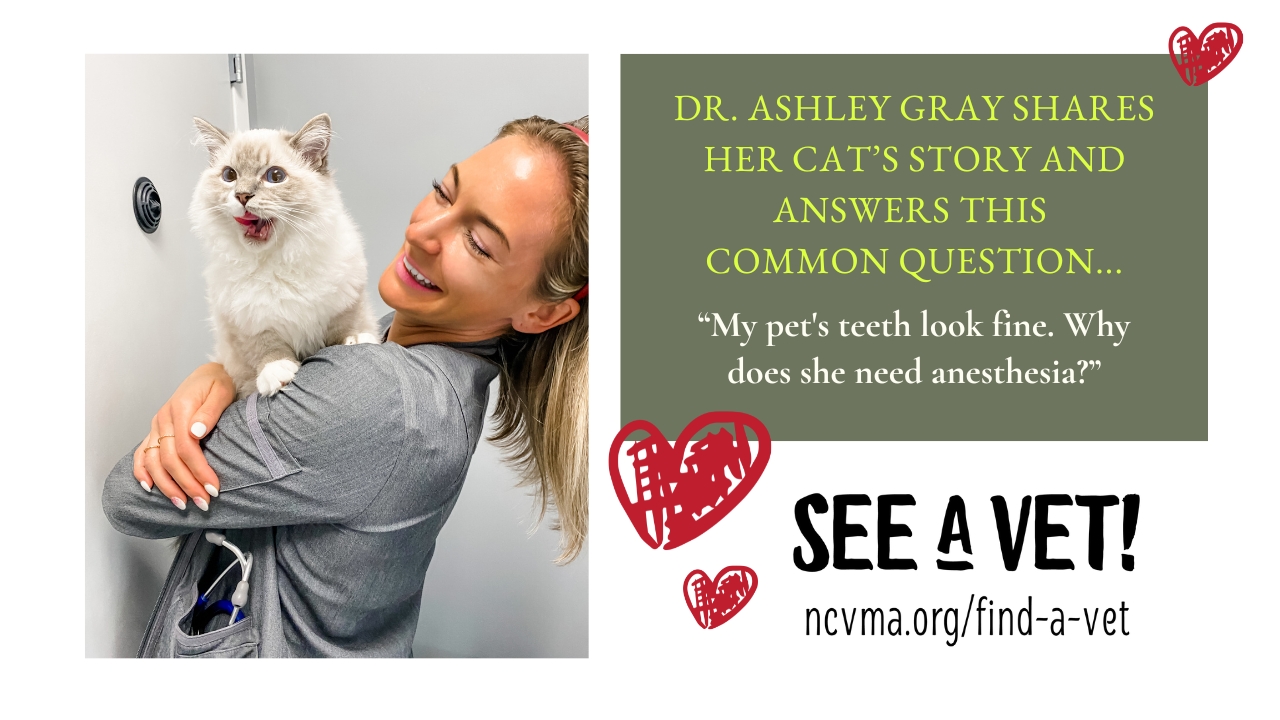
I may have “Doctor” in front of my name at work, but I will always be a mother first. A mother to two senior cats (10 and 16), two senior dogs (10 and 12), and two human girls (2 and 4½). Like many families, ours is full of love and a lot of moving parts. When you are juggling multiple schedules, personalities, and health needs, some things inevitably slide down the priority list. Dental care for your pets is often one of them.
Even as a veterinarian, I understand how easy it is to assume everything is fine when a pet seems normal at home. That is exactly what happened with my oldest cat, Lola. At the time, she was around 6-years-old and had never had a dental cleaning. She was eating, active, and acting like herself – or so I thought. Then I started noticing subtle changes. Lola began dropping food out of the side of her mouth and was not finishing meals the way she usually did. She also started pulling away when I rubbed her cheeks, something she normally loved. These were not dramatic signs, but they were out of character, and those small shifts are often the biggest red flags.
When I examined her mouth, I noticed a foul odor and redness along her gumline consistent with gingivitis, but nothing that fully explained the discomfort I was seeing at home. Comparing how her teeth looked on the surface, I was surprised by her behavior. Even with my training, I did not realize how much pain she was likely hiding. That is when I knew it was time to move forward with a dental cleaning and dental x-rays to see what was happening below the gumline. Prior to anesthesia, I ran bloodwork to ensure Lola was otherwise healthy, something we always recommend to keep pets as safe as possible during procedures. What we discovered next was eye-opening and a reminder that even attentive, knowledgeable pet parents can miss serious dental pain hiding in plain sight.
Let me start by saying this: I don’t “vet my own pets.” I intentionally rely on my colleagues to care for them so I can focus on being their mom, not their doctor. It removes the medical stress and allows me to see them simply as my family members. Once Lola was safely under anesthesia, we were finally able to take a thorough look at her mouth. That’s when I learned something that truly surprised me. She had feline resorptive lesions, also known as tooth resorption. In her case, there was a small hole leading into the tooth that had been completely hidden by tartar. It was not visible until after the teeth were cleaned, and it is something I never would have seen during a routine ‘awake’ exam.
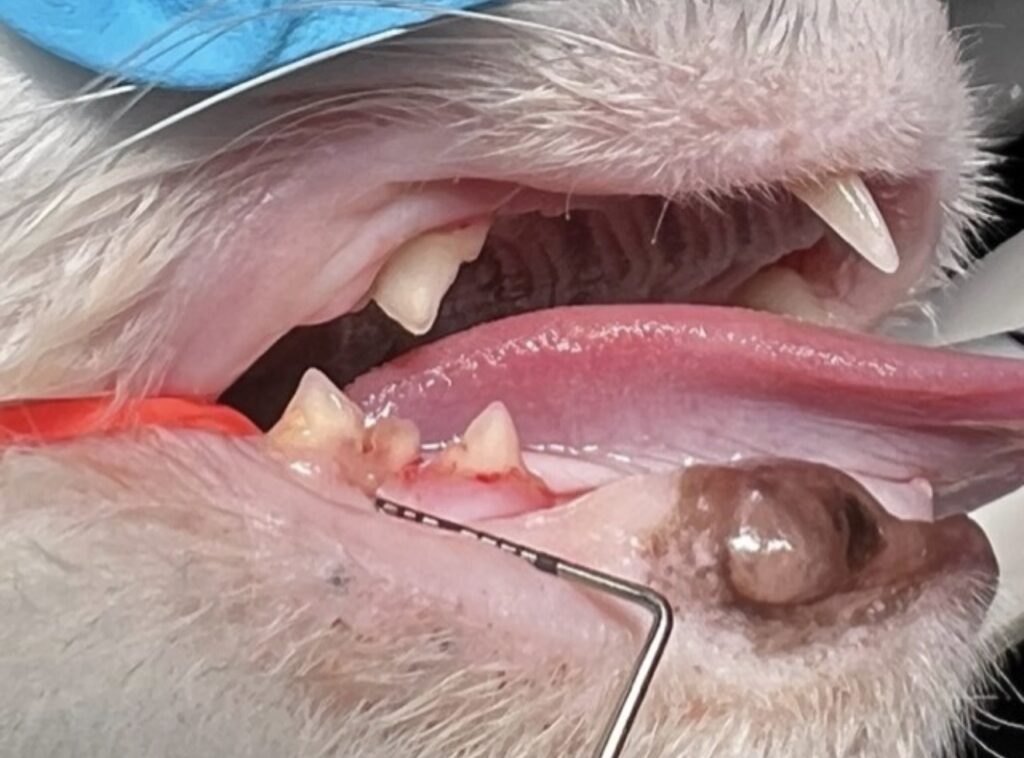
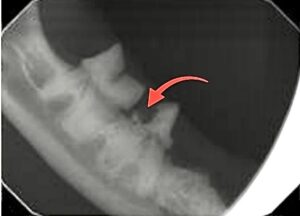
Dental x-rays confirmed the diagnosis of tooth resorption, and this step is absolutely critical. Feline resorptive lesions typically begin below the gumline, where we cannot see them with the naked eye. Even teeth that look relatively normal on the surface can be severely affected underneath. Without x-rays, we are only seeing the tip of the iceberg.
Feline resorptive lesions are one of the most common dental conditions in cats. In this disease, the body slowly breaks down the tooth structure over time. These lesions are extremely painful, yet cats are masters at hiding discomfort. Many continue eating and acting “normal,” which is why this condition is so often missed until it is advanced. Learning this made me feel like a terrible pet parent, until my veterinary training kicked in. I reminded myself that this condition is not caused by poor care or missed brushing. It occurs frequently, even in cats with clean-looking teeth and very attentive owners. It is common, progressive, and once it starts, it often continues throughout a cat’s life.
That is why regular dental cleanings under anesthesia with full-mouth x-rays are so important. Anesthesia allows pets to be completely still, pain-free, and safe while we perform a full oral exam, clean the teeth, and obtain accurate x-rays. Think of it exactly like when you go to the dentist, but our pets do not open up and say “ahhh.” Performing a dental cleaning under anesthesia is the only way to properly diagnose dental disease and treat it early. In Lola’s case, extraction (removal) of the tooth was the next step because the tooth is no longer healthy. By extracting the tooth, the source of pain was gone, and she healed fantastically within about a week!
While it can feel scary to go through dental procedures with your pet, especially when anesthesia is involved, I want you to know that I truly understand that fear. As veterinarians, we never take this lightly. Every dental procedure is carefully planned, and our goal is always the same: to keep your pet safe, comfortable, and as healthy as possible. Since Lola’s first dental procedure, both of my cats now receive dental cleanings every one to three years, depending on what I am seeing at home and what their teeth look like during exams. I continue this even as they age because keeping their pain to a minimum matters to me.
Anesthesia is far safer than many people realize. During every procedure, a trained veterinary team member (often a registered veterinary technician) closely monitors vital signs such as heart rate, temperature, blood pressure, and oxygen levels to ensure your pet remains stable and comfortable. As I mentioned earlier, Lola also had pre-anesthetic bloodwork done to confirm she was healthy enough for anesthesia, which is an important step that helps us tailor care to each individual pet. While anesthesia can feel intimidating, it is important to understand that the risks of untreated dental disease often outweigh the risks of anesthesia itself. When dental disease is left untreated, pets can suffer from chronic pain, infection, and even systemic effects on vital organs like the heart, liver and kidneys.
After Lola’s dental procedure, I watched her return to her normal self within weeks. She ate more comfortably, sought affection again, and seemed more relaxed overall. At 16 years old, she continues to thrive, and I truly believe that regular dental care has played a significant role in her quality of life. My only regret is that I did not schedule her first dental cleaning sooner. Lola’s journey has made me both a better pet parent and a better veterinarian.
If your veterinarian has mentioned a dental cleaning before, or if you have started noticing subtle changes like dropping food, avoiding face touching, or changes in eating habits, I encourage you to start the conversation now. Schedule a visit, ask questions, and talk openly about the procedure, anesthesia, cost, and timing. Dental care is not just about clean teeth. It is about relieving pain pets cannot tell us about.
— Dr. Ashley Gray, NCVMA PR Coordinator