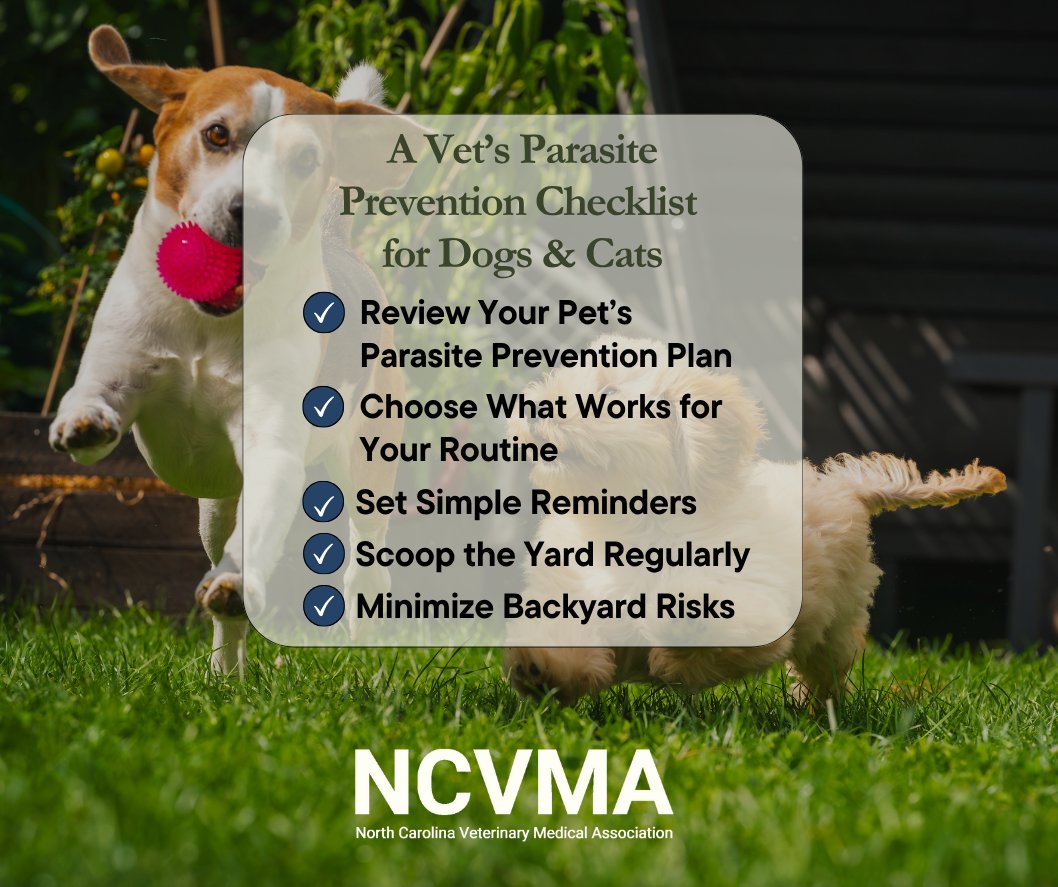
A Veterinarian’s Parasite Prevention Checklist for Dogs & Cats
Spring in North Carolina brings longer days, warmer weather and a noticeable rise in parasites that can affect our pets. While many pet parents do a great job keeping up with prevention year-round, this time of year is when parasite risks really ramp up.
From fleas and ticks to intestinal worms and heartworms, our region provides an ideal environment for these pests to thrive. Because temperatures rarely stay below freezing for long, we don’t get much of a seasonal break. That’s why consistent, proactive prevention is so important.
Here’s a simple, vet-approved checklist to help you stay ahead this spring without stress or guesswork.

✔️ 1. Review Your Pet’s Parasite Prevention Plan
Take a moment to check what your pet is currently taking:
- Do you have enough doses on hand?
- Is it a single product or multiple medications?
- Does it provide full coverage? This would include protection against:
- Heartworms
- Fleas
- Ticks
- Intestinal parasites (roundworms, hookworms, etc.)
For pets with higher exposure: those who travel and/or visit dog parks, boarding facilities, or daycare, or are drawn to any size body of water, coverage should ideally include the “big four” intestinal parasites:
- Hookworms
- Roundworms
- Whipworms
- Tapeworms
If you are unsure, your veterinarian can help tailor a plan based on your pet’s lifestyle and risk level.

✔️ 2. Choose What Works for Your Routine
The best prevention is the one you can give consistently. There are more options than ever, including:
- Topical options
- Monthly chewables
- Products given every few months
- Long-acting injections (lasting up to a year)
If giving medication is a struggle, or easy to forget, it is worth discussing alternatives with your vet. There’s no one-size-fits-all approach, and the best is the one that works for you and your pet.
There’s no one-size-fits-all approach, and the best is the one that works for you and your pet.
✔️ 3. Set Simple Reminders
Life gets busy and missing a dose happens.
Try:
- Setting a phone or calendar reminder
- Giving prevention on the same date each month (like the 1st)
If you’re a few days late, don’t worry! Give the dose and resume your usual schedule. Call your vet if it has been longer than 3-5 days. Consistency over time matters most.

✔️ 4. Scoop the Yard Regularly
It may not be glamorous, but it is one of the most effective ways to reduce parasite exposure.
- Many intestinal parasites are shed in feces
- Cleaning up a few times per week helps break the life cycle
- It also protects both pets and people
Some parasites are zoonotic, meaning they can be transmitted to humans, too. This is another important reason to maintain yard hygiene and stay on top of parasite prevention.

✔️ 5. Minimize Backyard Risks
Warmer weather brings more than just sunshine. It also increases activity from insects, wildlife, and even snakes.
Help reduce exposure risk by:
- Clearing wood piles
- Removing leaf debris
- Tidying shaded, cool areas
These environments can attract parasites and other hazards. Snakes, for example, often seek shelter in wood piles and are a common cause of spring and summer emergencies in pets.

Enjoy Spring Safely!
From mountain breezes to coastal sunshine, spring is a beautiful time to enjoy everything North Carolina has to offer. With a little preparation and consistency, you can help ensure your pets stay happy, healthy, and parasite-free all season long.
If you have questions or want to fine-tune your pet’s prevention plan, your veterinary team is always a great resource for you. Need a vet? Click here to find one near you!