by Ashley Gray, DVM
It’s that wonderful time of year again when the holiday spirit fills our homes. Boxes come down from the attic, decorations go up, and the entire atmosphere changes. Our pets notice right away. While the holidays bring sparkle and joy, they can also introduce hidden dangers for curious pets. To many of our four-legged friends, these festive additions look like fun, new climbing structures, irresistible chew toys, or sources of intriguing smells. Leaning on decades of members’ clinical experiences, we want to help you stay ahead this season, and stay out of the veterinary ER.
Watch Out for Tempting Holiday Foods

Remember the most common toxic foods for pets:
- Chocolate (can cause vomiting and diarrhea and be toxic to the heart and nervous system, depending on type of chocolate and size of animal)
- Grapes and raisins (can lead to kidney failure)
- Garlic and onions (blood cell damage and anemia)
- Xylitol (found in sugar-free gum, baked goods, and some peanut butters – causes liver failure, hypoglycemia and death)
Several holiday plants can also pose risks. For example, poinsettias may cause mild gastrointestinal upset like vomiting, diarrhea, and drooling if ingested, while certain varities of lilies can be toxic to cats acute kidney failure and potentially death. Make sure you know what type of plant is in your house to avoid seroious health complications.
When in doubt about anything you pet has ingested, consult a reliable pet poison resource. Two trusted references include:
Even non-toxic table scraps can cause problems. Rich, fatty foods may lead to vomiting, diarrhea, or pancreatitis, which can lead to hospitalization. Because pets are not accustomed to eating these foods, even a small bite can result in illness and potentially a late-night trip to the emergency clinic.
Keep Decorations Pet-Safe
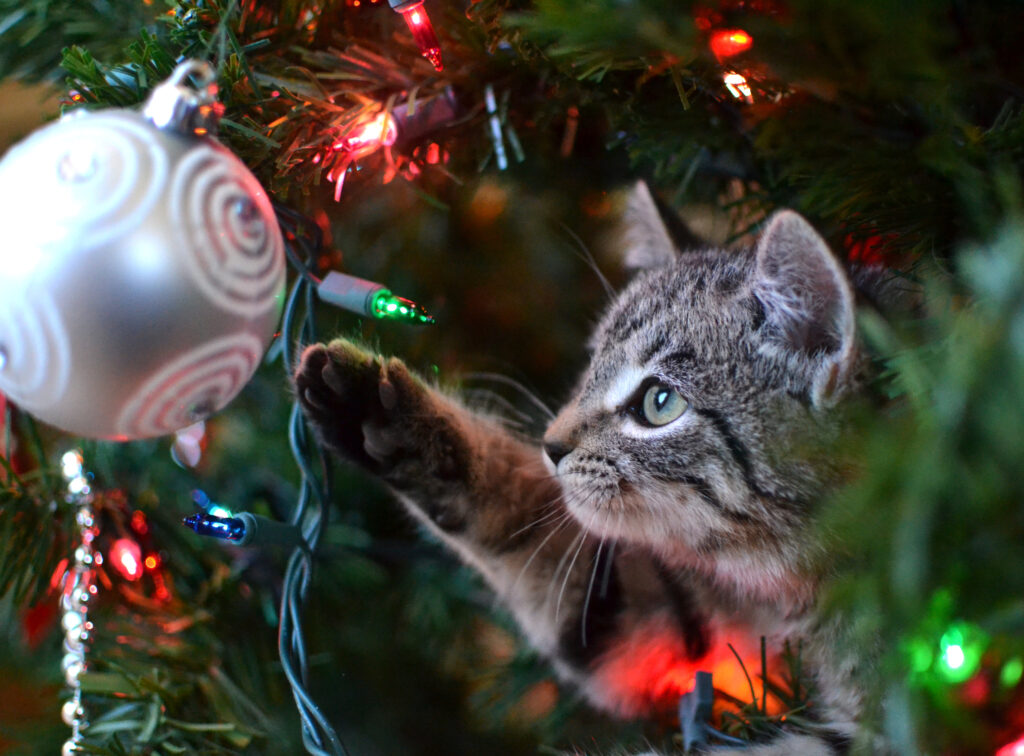 Holiday decorations bring beauty and cheer, but they can also be irresistible and dangerous to pets. Emergency veterinarians have seen ingestion of it all: ornaments, tinsel, ribbon, and more. Last year, one emergency veterinarian reported a dog who ate two broken ornaments and a cat who swallowed six inches of ribbon. The dog fortunately avoided surgery, but the cat required emergency surgery because the ribbon caused the intestines to accordion and risk perforation.
To help prevent similar emergencies:
- Secure ornaments with sturdy fasteners and avoid placing them on lower branches.
- Avoid using tinsel if you have pets
- If adding ribbon to gifts, choose thicker styles that are harder to swallow.
- Avoid leaving pets unsupervised around decorated areas. Baby gates or crates can keep them safe when you are away or unable to monitor them.
If an Emergency Happens, You’re Not Alone
With holiday gatherings, travel, and a busy household, it is impossible to watch pets every moment. Even veterinary professionals experience unexpected pet mishaps. If your pet eats something unusual or begins acting differently, don’t wait to seek help. (Find a vet)
Keep emergency clinic information handy, and contact your primary veterinarian promptly if you have concerns because quick action can make a life-saving difference. If your primary veterinarian is closed or unavailable, 24/7 emergency hospitals and urgent care clinics are there to assist. Be prepared for longer wait times around the holidays due to the increase in household hazards and staff taking time off for the holidays. A pro-tip is to dress in layers, and bring a snack, water, and book with you to wait.
Happy holidays! Stay safe, and we wish you and your pets a healthy and joyful New Year.